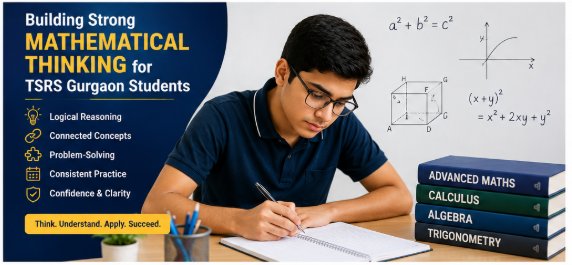

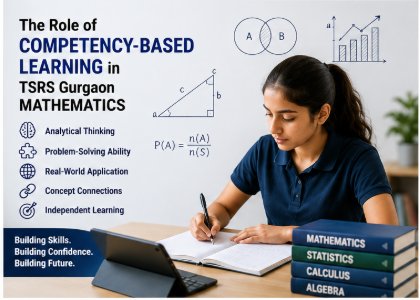
The Role of Competency-Based Learning in TSRS Gurgaon Mathematics
Related: our ISC home tutors in Gurgaon page, with 12 free ISC Class 11–12 guides.
The Role of Competency-Based Learning in TSRS Gurgaon Mathematics
The way students learn Mathematics is changing. Memorising formulas and reproducing familiar examples is gradually becoming less useful than understanding how mathematical concepts can be applied to different situations.
This is where competency-based Mathematics learning becomes valuable.
Instead of focusing only on whether a student can remember a formula, competency-based learning asks whether the learner can use mathematical knowledge independently, reason through unfamiliar situations and explain a solution logically.
For students in a rigorous Gurgaon school environment, this approach can strengthen both academic performance and long-term mathematical thinking.
What Is Competency-Based Mathematics Learning?
Competency-based learning focuses on what a student can actually do with their knowledge.
In Mathematics, competencies can include:
- Reasoning
- Problem solving
- Mathematical communication
- Interpretation
- Analysis
- Application
- Logical decision making
- Connecting different concepts
For example, instead of simply asking a student to calculate the derivative of a function, a competency-focused question may require the student to interpret the derivative in the context of a changing quantity.
The calculation is only one part of the task.
Moving Beyond "Which Formula?"
Traditional preparation can sometimes encourage students to ask:
Which formula should I use?
A stronger mathematical habit is:
What mathematical idea is this problem testing?
This small change can have a significant effect.
Students begin examining the structure of the problem rather than searching mechanically for a remembered equation.
Developing Problem-Solving Independence
The ultimate objective of tutoring should be to make students increasingly independent.
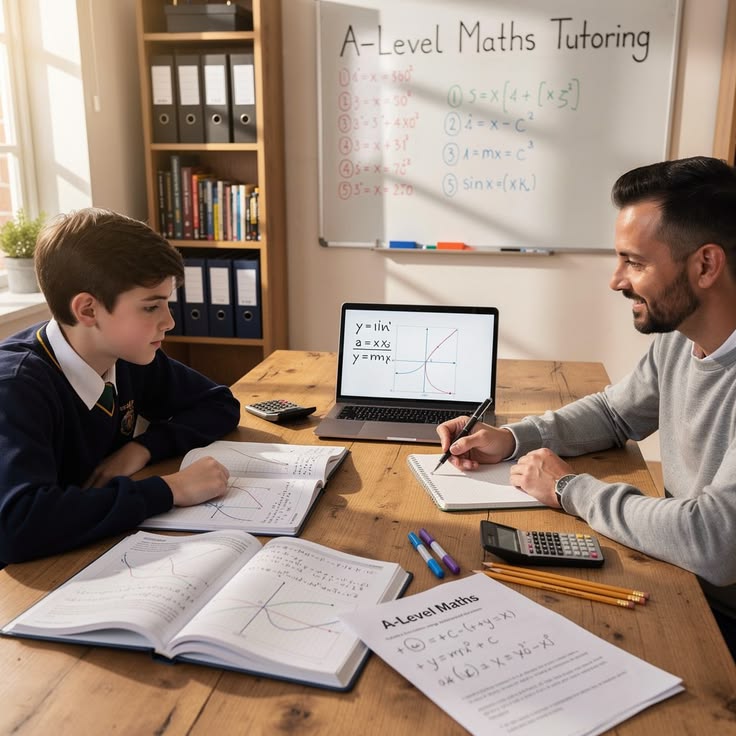
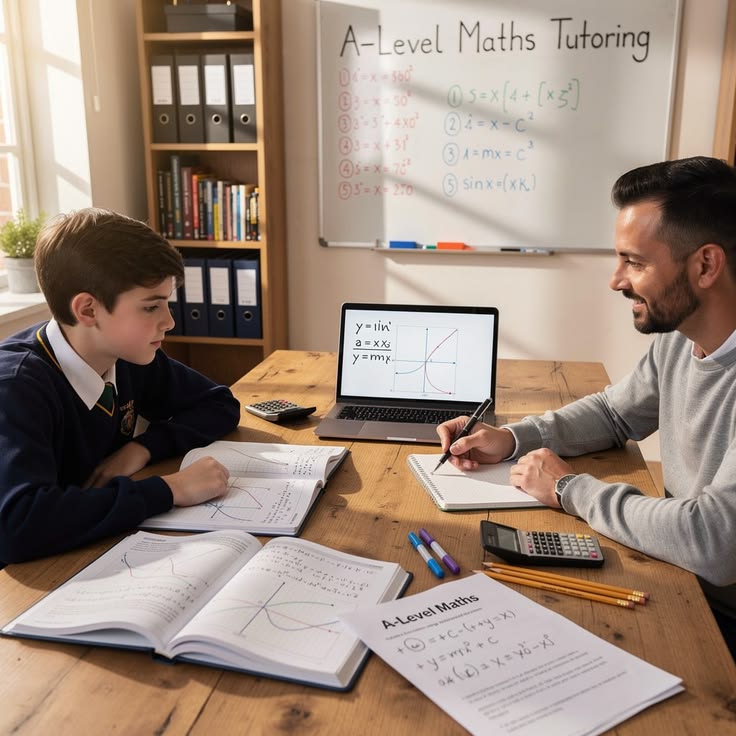
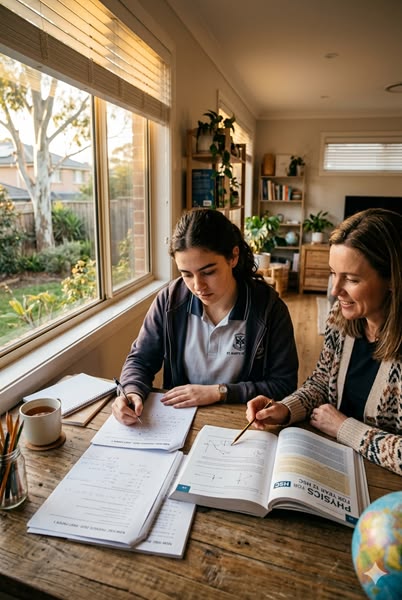
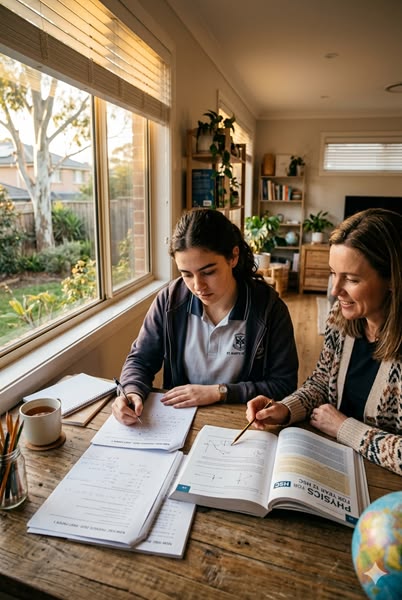
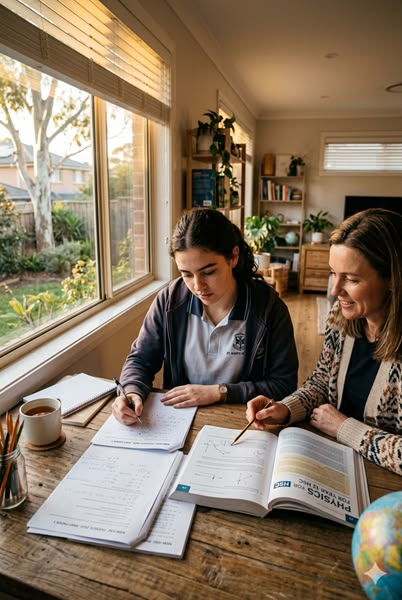
A tutor should not solve every difficult question for the learner. Instead, guidance should help students develop their own problem-solving process.
For instance, when a student gets stuck, the tutor can ask:
- What information do you already have?
- What is the unknown?
- Can you draw a diagram?
- Can you represent this algebraically?
- Which earlier concept is connected to this question?
- What would happen if you simplified the expression first?
These prompts encourage students to think.
Connecting Different Mathematical Topics
Competency develops when students understand that Mathematics is interconnected.
Algebra can support functions.
Functions can support calculus.
Coordinate geometry can support graphical interpretation.
Probability can require algebraic reasoning.
Trigonometry can connect with geometry and calculus.
Students who understand these connections are often better equipped to approach unfamiliar problems.
Real-World Mathematical Thinking
Application becomes easier when students understand how Mathematics operates outside the textbook.
Examples can include:
- Using functions to represent growth
- Applying percentages to financial decisions
- Using statistics to interpret data
- Using geometry in spatial planning
- Applying probability to uncertainty
- Using calculus to understand rates of change
These contexts help students see Mathematics as a language for describing relationships and patterns.
Competency-Based Practice at Home
Parents can also support this approach without turning home study into additional classroom teaching.
Instead of asking a student to complete a large number of identical questions, parents can encourage discussion around selected problems.
Useful questions include:
- Why did you choose this method?
- Is there another way to solve it?
- How can you verify the answer?
- Which concept did you use?
- Where did you find the difficult part?
This encourages reflection.
Assessment Should Measure More Than Correct Answers
A student who gets the correct answer using an unclear or inefficient method may still need support.
Assessment should therefore examine:
- Understanding
- Method selection
- Accuracy
- Reasoning
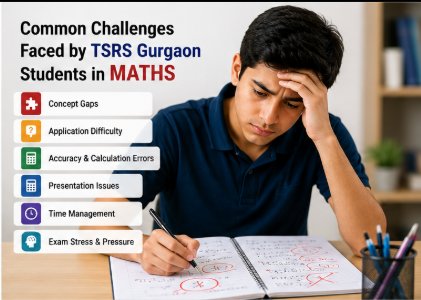
- Presentation
- Time management
- Ability to transfer knowledge
This is why structured assessments and targeted feedback are important components of effective Maths tutoring. Ajay Vatsyayan Classes' current Gurugram Maths pages emphasise chapter assessments, board-style practice, personalised doubt solving and progress tracking.
Building Confidence Through Competence
Confidence in Mathematics should come from competence rather than reassurance alone.
When students repeatedly experience the process of understanding a difficult concept, applying it correctly and solving a new problem independently, confidence develops naturally.
This creates a positive cycle:
Understanding → Practice → Success → Confidence → Greater Independence
Ajay Vatsyayan Classes and Concept-Focused Learning
Ajay Vatsyayan Classes offers Mathematics support for multiple curricula and school levels, with a focus on personalised learning, board-specific expectations and structured practice.
For TSRS Gurgaon students, the value of such support lies in connecting school learning with individual academic needs.
A student who is already strong may need higher-order problems and advanced application practice. A student with foundational gaps may need targeted remediation before moving to difficult topics.
The learning plan should reflect that difference.
Conclusion
Competency-based Mathematics learning prepares students for more than examinations. It teaches them how to interpret information, reason logically, choose methods, communicate solutions and approach unfamiliar problems.
For TSRS Gurgaon students, developing these capabilities alongside syllabus preparation can create a stronger and more sustainable foundation in Mathematics.






.png)
.png)
.png)






.png)









.jpg)





























.jpg)



.jpg)

.jpg)
.jpg)