

Gurgaon Home Tuition: Reading & Writing Support for Early Grades
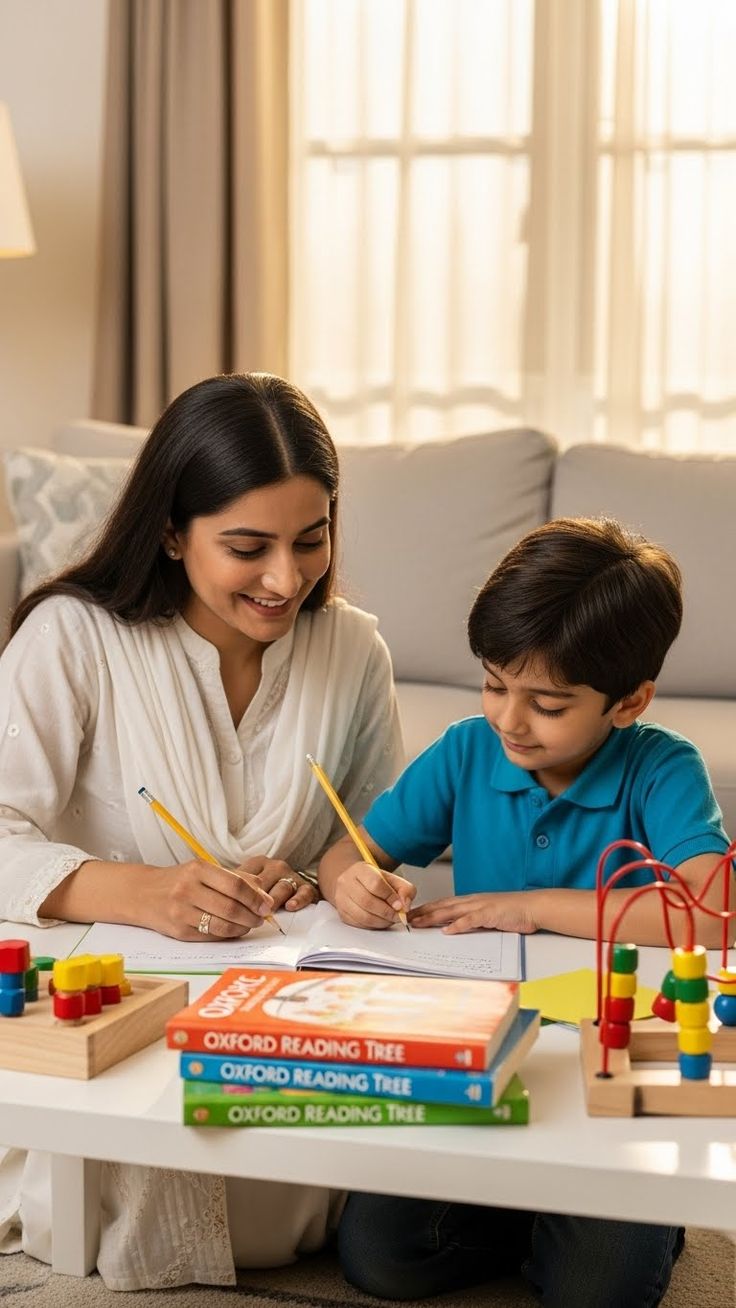
Reading and writing support at home in the early grades (roughly Classes 1 to 5) means short, regular one-to-one sessions. A patient tutor helps your child decode words, read with understanding, form letters neatly and put their own ideas into sentences. In Gurgaon, Ajay Vatsyayan Classes provides this as one-to-one home tuition, or live online for older primary children. Most young children do well with two or three sessions a week of 30 to 45 minutes, plus a few minutes of reading with a parent every day. Below is practical guidance on the signs to watch for, what a good session looks like, and what you can do at home.
By the Ajay Vatsyayan Classes Home Tutors Team · Reviewed by Ajay Vatsyayan (Founder). Last reviewed: 30 September 2026.
What early reading and writing support covers
Reading and writing grow together, so good support works on both in the same session. The main building blocks are:
- Sounds and letters: linking each letter, and pairs such as "sh" and "ch", to its sound, and blending sounds into words.
- Common words: recognising frequent words such as "the", "was" and "said" on sight, because many cannot be sounded out.
- Fluency: reading aloud smoothly enough that the meaning is not lost between words.
- Understanding: saying what happened, why, and what might happen next.
- Handwriting: a comfortable pencil grip, correct letter formation, and spacing between words.
- Composition: turning a spoken idea into a written sentence, then into a short paragraph.
- Spelling and punctuation: capital letters, full stops, and the spelling patterns the school is teaching.
Signs your child may need extra help
Every child develops at their own pace, and a single slow term is not a cause for alarm. The table gives general signs parents often notice. It is practical guidance, not a clinical checklist.
| Stage | What a tutor usually works on | Signs worth acting on |
|---|---|---|
| Classes 1–2 | Letter sounds, blending, common words, letter formation, simple sentences | Guesses words from the first letter or the picture; avoids reading aloud; letters are often reversed well into Class 2; cannot write a sentence they have just said |
| Class 3 | Fluency, reading for meaning, joining sentences, basic punctuation | Reads word by word with no expression; can read a page but cannot say what it was about; written work is much shorter than their spoken answers |
| Classes 4–5 | Longer texts, inference, paragraphs, spelling patterns, editing their own work | Struggles with word problems in Maths or questions in EVS because of the reading; avoids books entirely; homework that needs writing causes daily tears |
If worries continue for several months despite steady help, or you notice difficulties with speech, hearing or eyesight, talk to your child's class teacher and your paediatrician. A tutor can support learning, but a tutor does not diagnose learning difficulties.
What a one-to-one session looks like
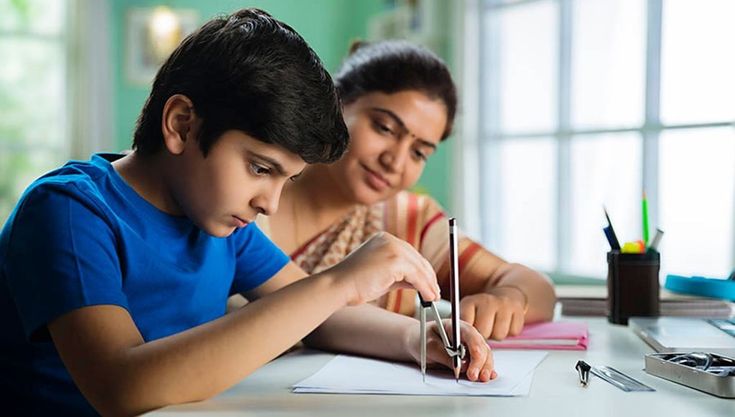
For young children, the structure matters as much as the content. A typical 40-minute home session is broken into short parts.
- Warm-up (5 minutes): rereading a familiar page aloud. It builds confidence and fluency before anything new.
- Word work (8–10 minutes): a sound pattern or spelling rule, using letter cards, a whiteboard or a word game.
- Shared reading (10 minutes): a new short text read together, with the tutor stopping to ask "What do you think happens next?" or "How does she feel?"
- Writing (10 minutes): the child says a sentence about the story, the tutor helps them hold it in their head, and the child writes it.
- Wrap-up (5 minutes): the child reads their sentence back and picks one thing to practise with a parent before the next session.
From our tutors: the most common writing problem we see in Classes 1 to 3 is not spelling. It is a child who has a lovely idea but forgets it halfway through writing. Saying the sentence aloud two or three times first, and counting the words on fingers, usually means much more of it reaches the paper.
Practical ways to build reading
- Sound it out, then reread. Once a word has been decoded, ask your child to read the whole sentence again so the meaning comes back.
- Choose books that are slightly easy. If your child struggles with more than a few words on a page, the book is too hard for reading alone. Read it to them instead.
- Ask questions that need thinking. "Why did he run?" teaches more than "What colour was the ball?"
- Reread favourites. Reading the same book several times is not wasted effort; it builds speed and expression.
- Read to them, even after they can read. Hearing stories above their own reading level widens vocabulary and keeps books enjoyable.
Practical ways to build writing
- Check the grip early. A tight fist or a thumb wrapped over the fingers tires the hand quickly. Short, chunky pencils help young children.
- Teach letter formation in families. Letters that start the same way, such as c, a, d, g, o and q, are easier to learn together.
- Talk before writing. Plan aloud first: who, what, where, and what happened in the end.
- Use sentence starters. "First I…", "Then…", "I felt…" give a hesitant writer a way in.
- Edit with one question at a time. "Does every sentence start with a capital letter?" is manageable; correcting everything at once is not.
- Keep good work visible. A sentence on the fridge does more for motivation than a page of red marks.
From our tutors: when a Class 4 or 5 child "hates writing", the reason is often slow, tiring handwriting rather than a lack of ideas. We separate the two: the child dictates a paragraph while the tutor writes it, then copies one sentence neatly. As handwriting eases, the child writes more of it themselves.
Homes with more than one language
Many Gurgaon children speak Hindi or another Indian language at home and learn to read in English at school, often while learning Hindi script too. Growing up with more than one language is common here, and in our experience it is not a problem in itself, but it helps to be deliberate. Keep reading stories in the home language as well, talk about English words that do not exist in that language, and do not treat mixing languages in speech as a mistake. A tutor can support English and Hindi reading side by side.
Fifteen minutes a day at home
Parents do not need to become teachers. A small, steady routine helps more than a long weekend session.
- Five minutes of your child reading aloud to you from something they chose.
- Five minutes of you reading aloud to them.
- Five minutes of talk or writing: a one-line diary entry, a shopping list, or a note to a grandparent.
Keep it calm. If your child is tired or upset, read to them instead and try again tomorrow.
Home tuition, online sessions and choosing a tutor
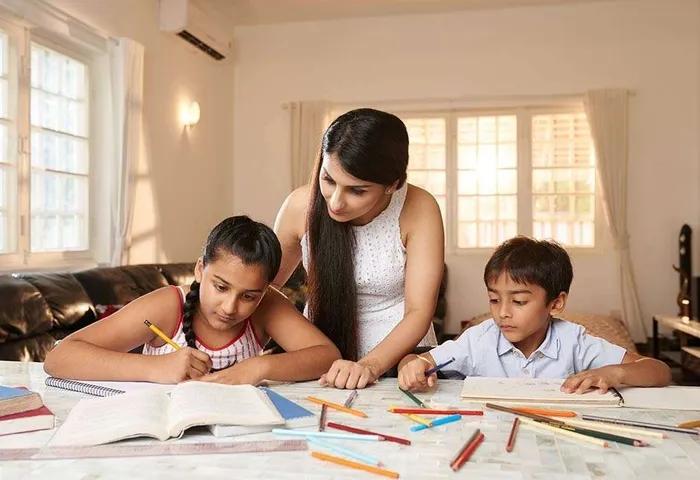
For children in Classes 1 to 3, we recommend home sessions. A tutor at the table can watch the pencil grip, point to words and keep a young child's attention in a way a screen cannot. Online sessions can work from Class 4 or 5 for reading, discussion and editing, particularly for families who travel. Many parents of young children prefer a female tutor; our page on female home tutors in Gurgaon explains how that works. The same one-to-one approach suits CBSE, ICSE and IB Primary Years schools.
Ajay Vatsyayan Classes has supported families across Gurugram for 12+ years, with 500+ verified tutors in our network. Home sessions cover areas from DLF and Golf Course Road to Sohna Road, including the sectors on our pages for home tutors in Sectors 44–49 and Sectors 90–99. To see every subject and class we teach, visit our directory of home tutors in Gurgaon.
Before you book, it helps to know what a first session will involve; our post on what to expect from a tuition demo class explains it. When your child moves up to middle school, our Class 6 tuition in Gurgaon page covers the next stage.
Frequently asked questions
At what age should I consider reading support?
There is no fixed age. If your child is in Class 1 or 2 and reading feels like a daily struggle for more than a term, a few weeks of one-to-one help is a reasonable step. Earlier support is usually shorter and easier than catching up in Class 4 or 5.
How long should each session be for a young child?
About 30 minutes for Classes 1 and 2, and 40 to 45 minutes for Classes 3 to 5, broken into short activities. Longer sessions tend to end with a tired, restless child.
Will the tutor follow my child's school books?
Yes. The tutor uses the school's reader and worksheets where possible, and adds simple books at the right level for extra practice.
My child reads well but hates writing. Can a tutor help?
Yes. This is common. The tutor will check handwriting comfort, then build writing from spoken ideas, so your child stops seeing writing as a chore.
Should I correct every mistake my child makes when reading aloud?
No. Let small slips go if the meaning is intact. Stop only when a mistake changes the sense, and ask, "Does that make sense?" so your child learns to check for themselves.
How will I know it is helping?
Look for your child reading aloud more willingly, starting written homework with less fuss, and writing a little more each week. The tutor should tell you, in simple terms, what has improved and what comes next.
To arrange a free demo for reading and writing support, tell us your child's class, school and area or call +91 92204 75088. We will match a patient tutor for home sessions in Gurgaon or online.
Ajay Vatsyayan Classes, Saraswati kunj II, Wazirabad, Sector 52, Gurugram, Haryana 122003 · +91 92204 75088.