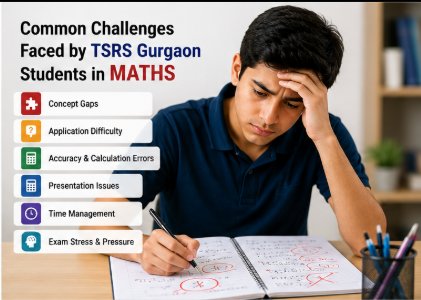


Building Strong Mathematical Thinking for TSRS Gurgaon Students
Related: our ISC home tutors in Gurgaon page, with 12 free ISC Class 11–12 guides.
Building Strong Mathematical Thinking for TSRS Gurgaon Students
High performance in Mathematics is not simply about knowing more formulas. It is about developing the ability to recognise patterns, break problems into logical steps, connect concepts and select appropriate methods.
For students in an academically focused environment such as TSRS Gurgaon, developing mathematical thinking can make a significant difference to both day-to-day classroom performance and long-term academic preparation.
Ajay Vatsyayan Classes approaches Maths tuition with an emphasis on conceptual understanding, structured problem solving and personalised academic support across major curricula.
What Is Mathematical Thinking?
Mathematical thinking involves much more than calculation.
It includes the ability to:
- Identify patterns
- Analyse relationships
- Make logical deductions
- Break complex problems into stages
- Compare different approaches
- Explain reasoning
- Evaluate whether an answer is reasonable
- Apply knowledge in unfamiliar situations
A mathematically strong student does not necessarily solve every question instantly. Instead, they know how to approach a question when the answer is not immediately obvious.
Learning to Break Down Difficult Problems
Complex questions become easier when students stop viewing them as a single task.
For example, a student can divide a problem into:
Step 1: Understand the information.
Step 2: Identify the required result.
Step 3: Recognise the relevant concept.
Step 4: Select a suitable method.
Step 5: Work through the calculations.
Step 6: Verify the result.
This method creates structure even when the question is unfamiliar.
Connecting Mathematical Concepts
Strong students understand that chapters are not isolated.
Algebra supports functions.
Functions support calculus.
Geometry supports coordinate reasoning.
Probability connects mathematical modelling with uncertainty.
Statistics involves interpretation rather than calculation alone.
When students see these relationships, they can use previously learned knowledge to solve new problems.
Why "Why?" Is More Important Than "What?"
A formula tells students what to calculate.
Mathematical reasoning tells them why the calculation is appropriate.
Tutors can therefore encourage students to explain their methods.
Instead of asking only:
"What is the answer?"
ask:
"Why did you choose this method?"
This simple question encourages deeper understanding.
Developing Multiple Methods
Some mathematical problems can be solved in more than one way.
Students should occasionally be encouraged to compare methods.
For example:
- Algebraic approach
- Graphical approach
- Geometric approach
- Numerical approach
The purpose is not to make every question longer. Instead, students learn that Mathematics is flexible.
Over time, they become better at selecting efficient methods.
Practice Should Be Purposeful
Not all practice has the same educational value.
Solving 50 identical questions may provide less learning than solving 10 carefully selected questions that test different aspects of a concept.
A strong practice set can contain:
- Foundation questions
- Concept-check questions
- Application problems
- Multi-step problems
- Mixed-topic questions
- Higher-order questions
- Timed examination questions
This provides a broader picture of mathematical ability.
The Role of Error Analysis
Mistakes are valuable when students understand them.
After a test, students should not simply look at the correct answers.
They should classify their mistakes.
Concept Error: I did not understand the principle.
Method Error: I selected the wrong approach.
Calculation Error: My process was correct but arithmetic went wrong.
Reading Error: I misunderstood the question.
Presentation Error: My reasoning was incomplete or unclear.
Time Error: I knew the concept but could not complete it efficiently.
This classification makes future revision more targeted.
Building Exam Confidence
Confidence should develop gradually through measurable progress.
A student who can successfully solve increasingly difficult problems begins to trust their own reasoning.
Regular assessments can help students see that progress.
Ajay Vatsyayan Classes' Gurugram Maths programmes emphasise structured lesson planning, practice, assessments and personalised doubt solving, all of which can support this progression.
A Balanced Mathematics Routine
A student does not necessarily need to spend several hours every day on Mathematics.
Consistency is often more valuable.
A balanced weekly routine can include:
- Concept revision
- Focused problem solving
- Weak-topic practice
- Mixed questions
- Timed assessment
- Error analysis
- Revision of previously studied concepts
This prevents the common situation where students study intensively immediately before examinations but forget material later.
Personalised Support for TSRS Gurgaon Students
Every student has a different academic profile.
One learner may need support in calculus. Another may require help with algebraic manipulation. Someone else may understand every concept but need examination practice.
This is why personalised tutoring can be useful.
Ajay Vatsyayan Classes offers board-specific Mathematics tuition and personalised learning options for students across Gurgaon, including support for students studying in different school and curriculum environments.
The objective is to make the learning process more targeted:
Assess → Identify → Teach → Practise → Test → Analyse → Improve
From Strong Students to Independent Learners
The ultimate goal of tutoring should not be permanent dependence on a tutor.
A successful Maths programme should gradually help students become independent learners.
Students should eventually be able to:
- Identify what they do not understand
- Find the relevant concept
- Select a suitable method
- Attempt difficult questions independently
- Review their own mistakes
- Plan revision
- Manage examination time
This is a much stronger outcome than simply completing homework.
Conclusion
Strong mathematical thinking develops through consistent exposure to reasoning, application and structured problem solving. For TSRS Gurgaon students, combining conceptual learning with purposeful practice can create a stronger foundation for challenging Mathematics topics and examinations.
The goal should not be to make Mathematics easier by avoiding difficult questions. It should be to make students better equipped to solve difficult questions.
For students and parents looking for personalised Maths tuition in Gurgaon, Ajay Vatsyayan Classes can provide a structured learning approach focused on conceptual clarity, application, assessment and progressive improvement.
SEO Keyword Set for These 5 Blog Pages
Use these keywords naturally across the relevant pages rather than inserting all of them into every article.
Primary Keywords
- TSRS Gurgaon Maths tuition
- Maths tuition in Gurgaon
- ISC Maths tuition Gurgaon
- ISC Maths tutor Gurgaon
- Maths tutor in Gurgaon
- Mathematics tuition Gurgaon
- TSRS Maths tutor
- ISC Mathematics preparation
Secondary Keywords
- Maths home tuition Gurgaon
- one-to-one Maths tutor Gurgaon
- personalised Maths tuition Gurgaon
- Class 11 ISC Maths tuition
- Class 12 ISC Maths tuition
- ISC Mathematics tutor
- Mathematics tutor near TSRS Gurgaon
- Maths coaching Gurgaon
- board exam Maths preparation
- ISC Maths preparation
- conceptual Maths learning
- application-based Mathematics
- problem-solving Maths tuition
Semantic / LSI Keywords
- conceptual clarity in Mathematics
- mathematical reasoning
- competency-based learning
- higher-order thinking
- application-based questions
- multi-step Maths problems
- mathematical problem solving
- structured Maths practice
- Maths assessment
- exam-oriented Mathematics preparation
- step-by-step Maths solutions
- Mathematics fundamentals
- logical reasoning in Maths
- Maths exam preparation
- personalised learning plan
Recommended Image Strategy
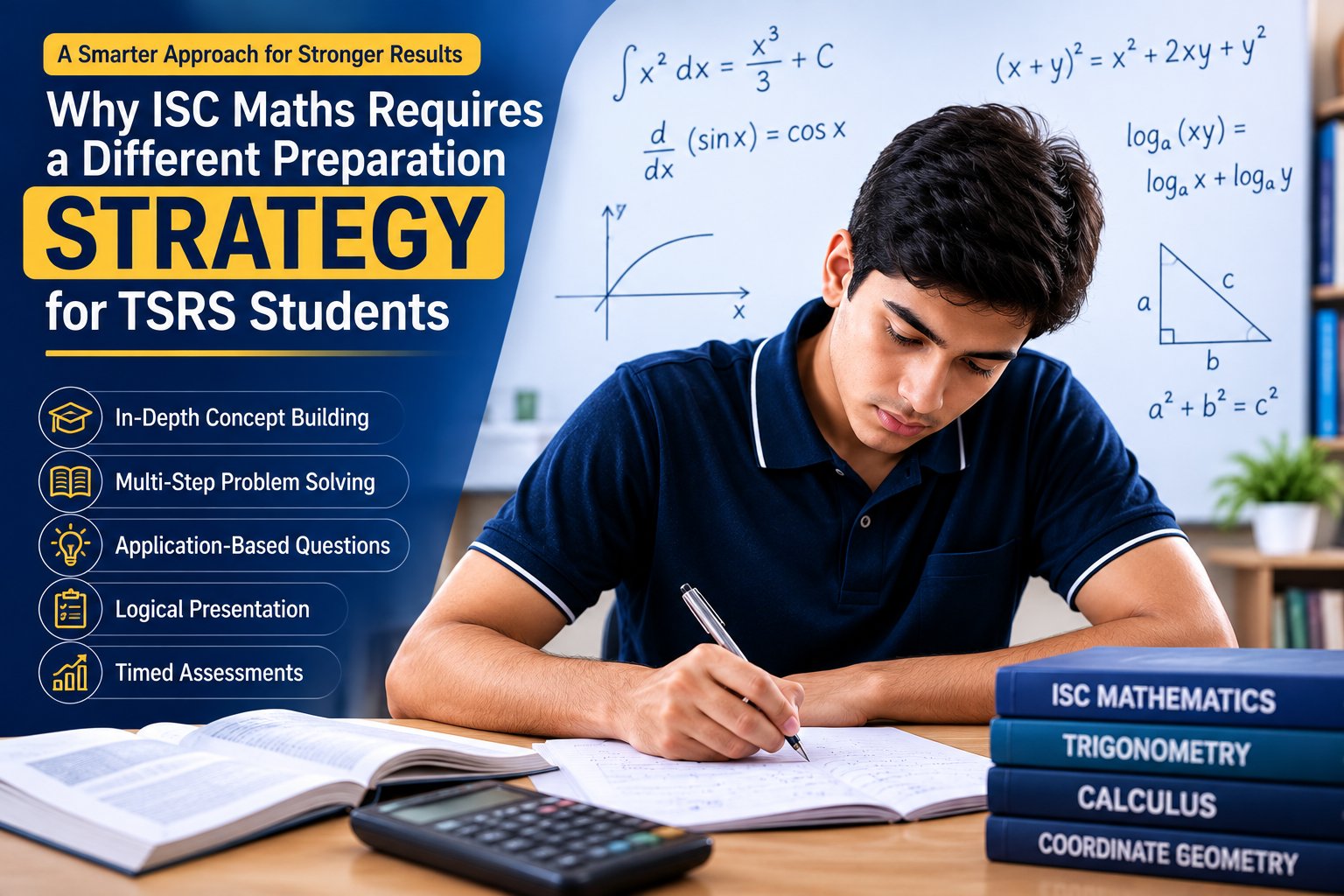
For the Event Image field shown in your screenshot, I recommend keeping each of the five images visually different rather than uploading the same generic Maths image to all five pages:
| Blog | Image Concept | Suggested File Name |
|---|---|---|
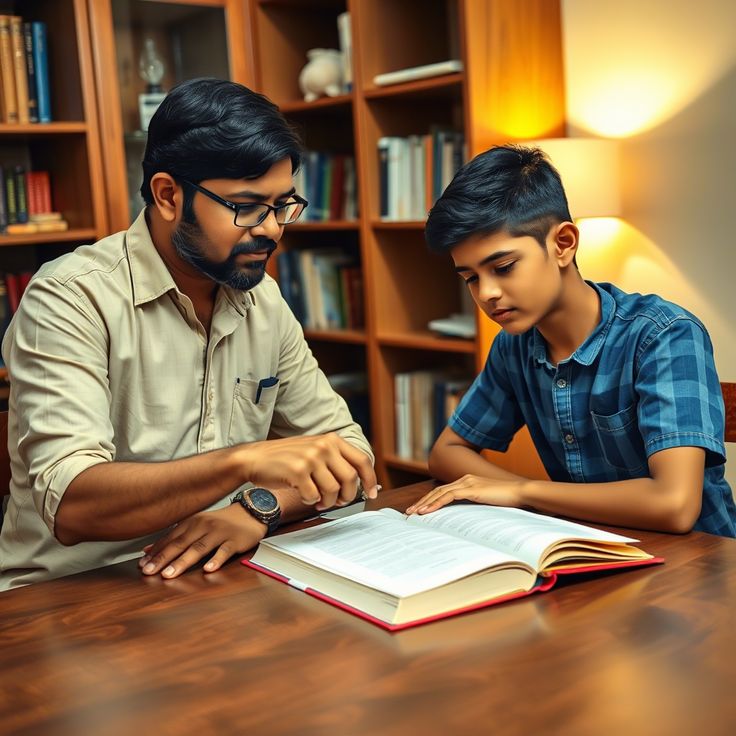
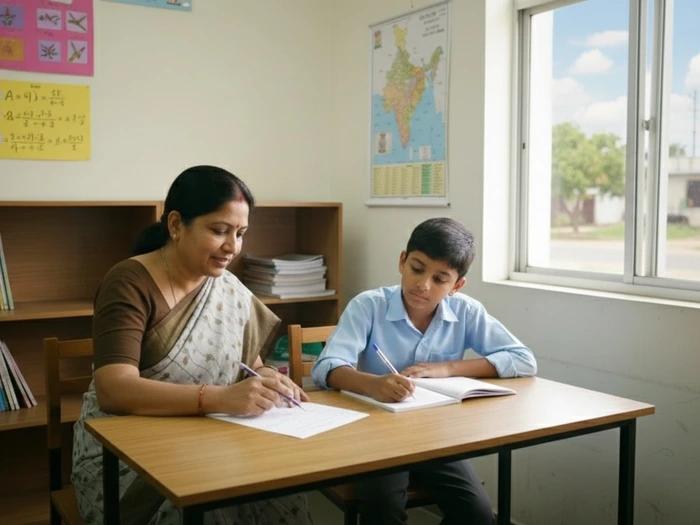
| Blog 1 | Conceptual Maths learning / tutor explaining concepts | tsrs-gurgaon-mathematics-academic-approach.jpg |
| Blog 2 | ISC examination preparation / advanced problem solving | isc-maths-preparation-tsrs-gurgaon.jpg |
| Blog 3 | Competency-based / real-world Mathematics | competency-based-maths-tsrs-gurgaon.jpg |
| Blog 4 | Identifying and correcting Maths mistakes | common-maths-challenges-tsrs-gurgaon.jpg |
| Blog 5 | Logical reasoning / advanced mathematical thinking | mathematical-thinking-tsrs-gurgaon.jpg |
For SEO, make the image filename and alt text describe the actual image, rather than stuffing it with repeated keywords.
Recommended Status
For all five completed pages:
Publish
Important SEO Note
I have deliberately not repeated the same introduction, same service description, or same keyword pattern across all five blogs. Each page has a different search intent:
- Academic approach → informational intent
- ISC preparation strategy → preparation/exam intent
- Competency-based learning → educational/informational intent
- Common Maths challenges → problem/solution intent
- Mathematical thinking → skill-development intent
That separation is useful for building a broader topical cluster around TSRS Gurgaon Maths tuition, ISC Mathematics preparation and Maths tutoring in Gurgaon, rather than publishing five pages that compete with each other for exactly the same search query.
The Ajay Vatsyayan Classes website already uses Gurgaon-specific school and curriculum positioning—for example, its Maths pages reference The Shri Ram School (Aravali), Heritage Xperiential Learning School, DPS Gurgaon and other Gurugram schools, while offering board-aligned support across CBSE, ICSE, ISC, IGCSE and IB. This makes the TSRS Gurgaon + ISC Maths + personalised tuition angle a natural fit for the site rather than an unrelated SEO topic.







.png)
.png)
.png)






.png)









.jpg)



























.jpg)



.jpg)

.jpg)
.jpg)