

Online vs Offline JEE Maths Classes: Which One Is Better?
Related: our JEE maths tutor in Gurgaon page, with 12 free JEE maths guides.
Neither online nor offline JEE maths classes are better for every student. A classroom coaching institute suits a confident, self-driven student who can keep up with a fixed pace. One-to-one home tuition suits a student with gaps, or one who needs someone reading their working line by line. Live online one-to-one suits a motivated student with a crowded timetable who still wants personal attention. For JEE maths in particular, three questions decide it: how quickly doubts get cleared, who checks the written working, and whether the pace matches your child. Many families end up combining two modes.
By the Ajay Vatsyayan Classes Home Tutors Team · Reviewed by Ajay Vatsyayan (Founder). Last reviewed: 30 September 2026.
We wrote this for JEE aspirants in Gurgaon (Gurugram) and their parents, with exam facts taken from the Information Bulletin NTA issued for JEE Main 2026. For a broader comparison covering school subjects, see our article on home tuition vs online coaching in Delhi NCR; this one focuses on JEE maths.
"Online" and "offline" each mean two different things
- Offline, classroom coaching institute: one teacher, a room of students, a fixed timetable and regular institute tests.
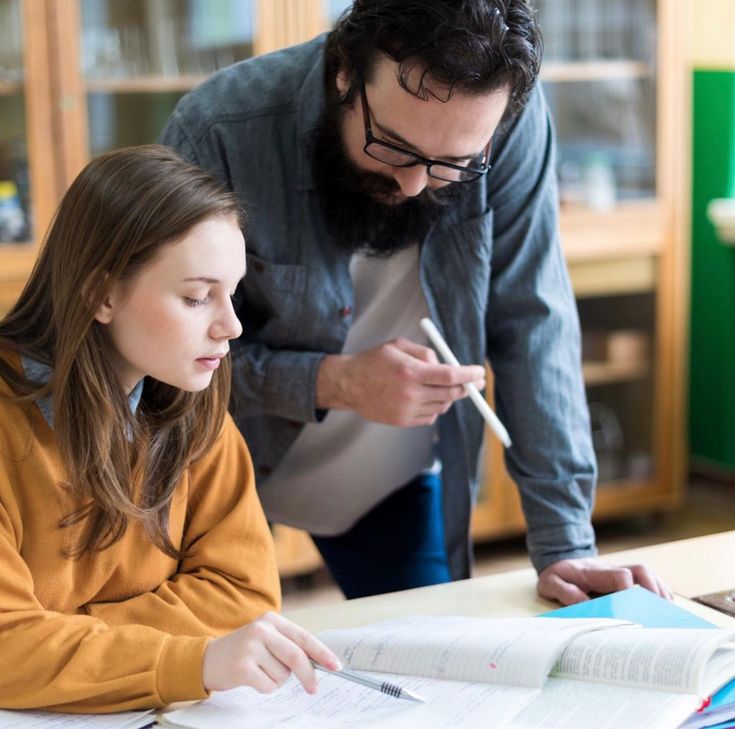
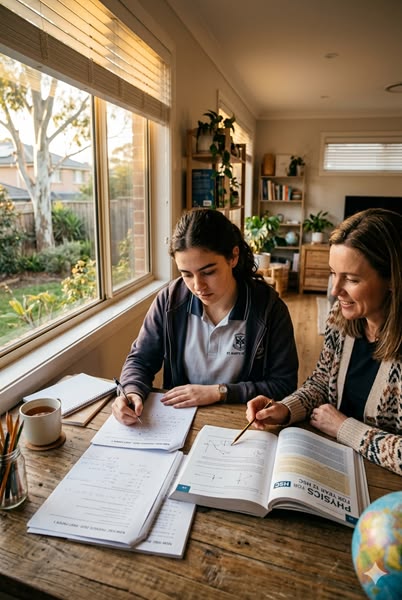
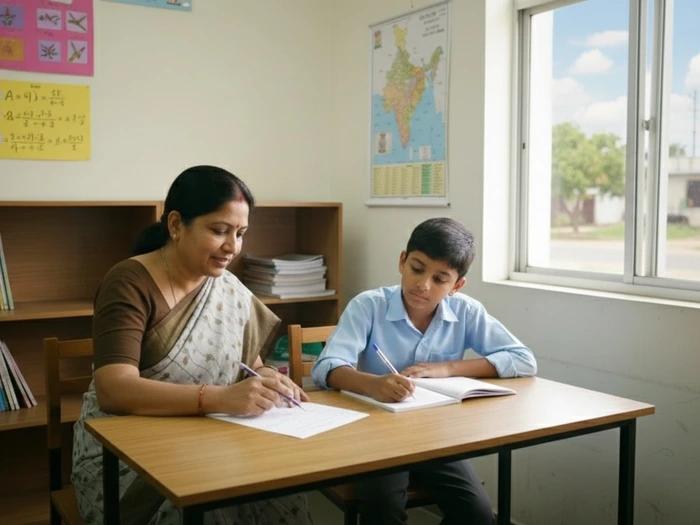
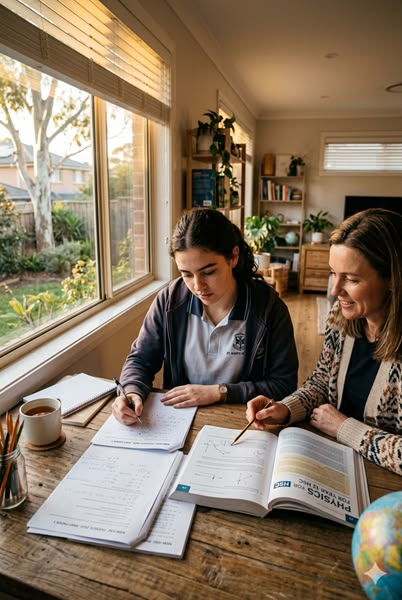
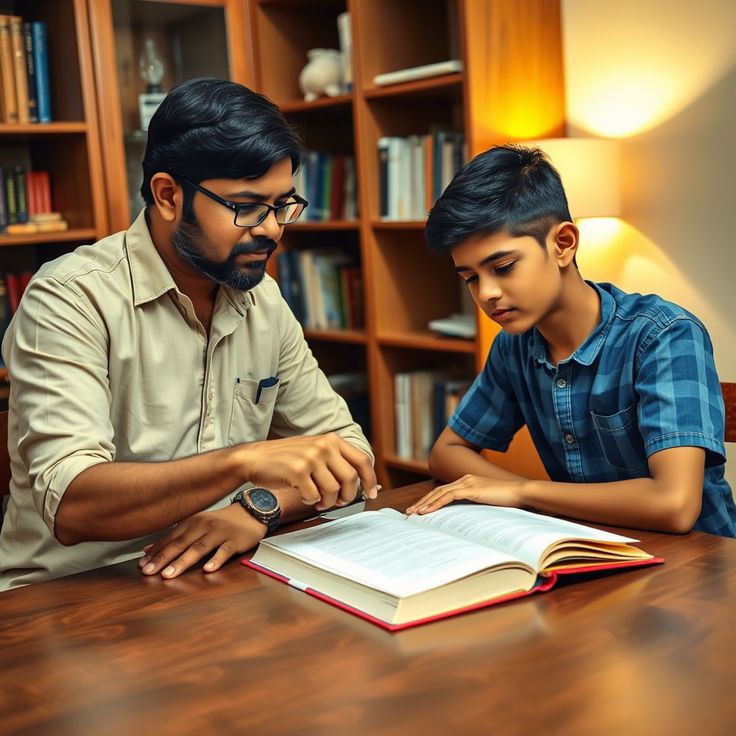
- Offline, one-to-one home tuition: a tutor comes to your home and teaches only your child.
- Online, large course: live or recorded lectures to many students, with doubts handled separately.
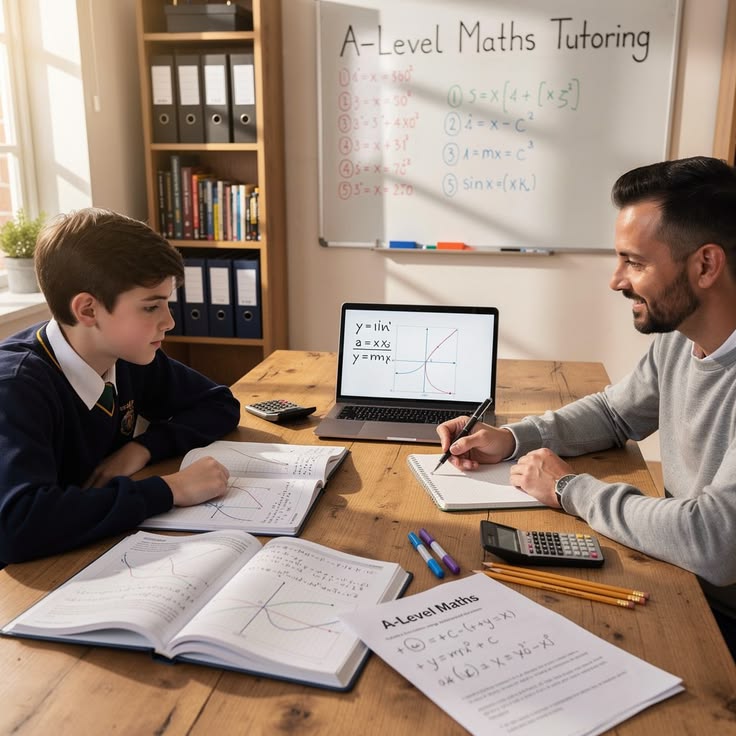
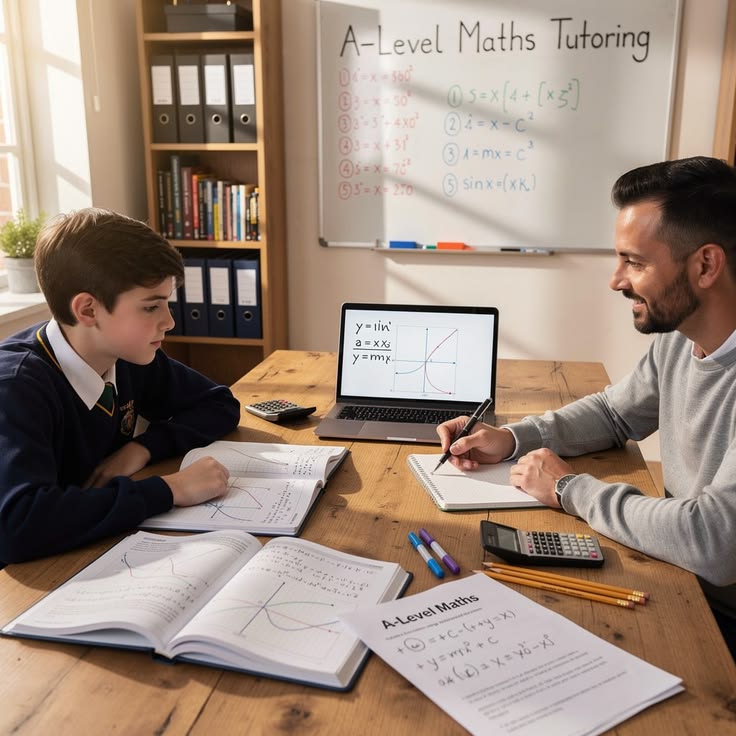
- Online, live one-to-one: a single student and tutor working together over video, usually on a shared whiteboard.
So the real divide is not online against offline. It is one teacher for many students against one teacher for one student. Ajay Vatsyayan Classes offers only the two one-to-one options: home tuition in Gurgaon and live online classes.
What JEE maths demands, whichever mode you choose
JEE maths questions often combine two or three chapters, and one slip in the fifth line of working costs the whole question. The JEE Main 2026 pattern adds demands of its own:
- Paper 1 is a computer-based test. Answers are chosen or entered on screen, while rough work is done on blank sheets provided in the exam hall.
- In maths, Section A holds 20 multiple-choice questions and Section B holds 5 numerical-answer ones. In both, a right answer earns four marks and a wrong one loses one.
- Numerical answers are entered as integers on an on-screen keypad, and calculators are not allowed.
- NTA makes a sample mock test available on its website so candidates can practise the computer-based format.
Good preparation in any mode therefore needs three things: someone who sees the student's handwritten working, regular timed practice, and some practice in the on-screen format. Our JEE maths PYQ strategy explains how previous-year questions fit into that routine.
Classroom coaching, home tuition and online one-to-one compared
| Factor | Classroom coaching institute | One-to-one home tuition | Live online one-to-one |
|---|---|---|---|
| Pace | Set by the institute's calendar | Set by the student's needs | Set by the student's needs |
| Maths doubts | Asked in class if time allows, or in separate doubt sessions | Cleared as they arise, in the student's own notebook | Cleared as they arise, on a shared whiteboard |
| Checking written working | Hard to do line by line for every student | Tutor reads each line on paper | Works if the student shares photos of each page |
| Tests | Regular institute tests taken with many students | Chapter tests and full papers set by the tutor | As at home, and easy to run on screen |
| Sense of the competition | Strong: students see where they stand in a large class | Weak: add outside mock tests | Weak: add outside mock tests |
| Travel | Daily commute to the institute | None for the student | None for anyone |
| Fit with school and board | Institute order may run ahead of or behind school | Can follow the school order and the JEE syllabus together | As at home |
| Usually suits | Confident, self-driven students | Students with gaps, or who drift without supervision | Motivated students with busy timetables |
When a classroom coaching institute works well
An institute can suit a student who already has strong Class 10 maths, keeps pace without reminders and enjoys competing. The fixed timetable brings structure, and tests taken alongside many students give a clear sense of standing. The risk is a quiet one. A student who misses one idea, say the locus of a point in coordinate geometry, may not ask, and the class moves on. Many families then add a one-to-one tutor for the chapters that slipped.
When one-to-one home tuition is the stronger choice
- Gaps in Class 9 or 10 algebra keep breaking Class 11 chapters.
- Marks are lost to errors in working that nobody is reading.
- The student works well with an adult present but drifts alone.
- The school board is ISC, IB or IGCSE, and JEE preparation must fill specific gaps around the school course.
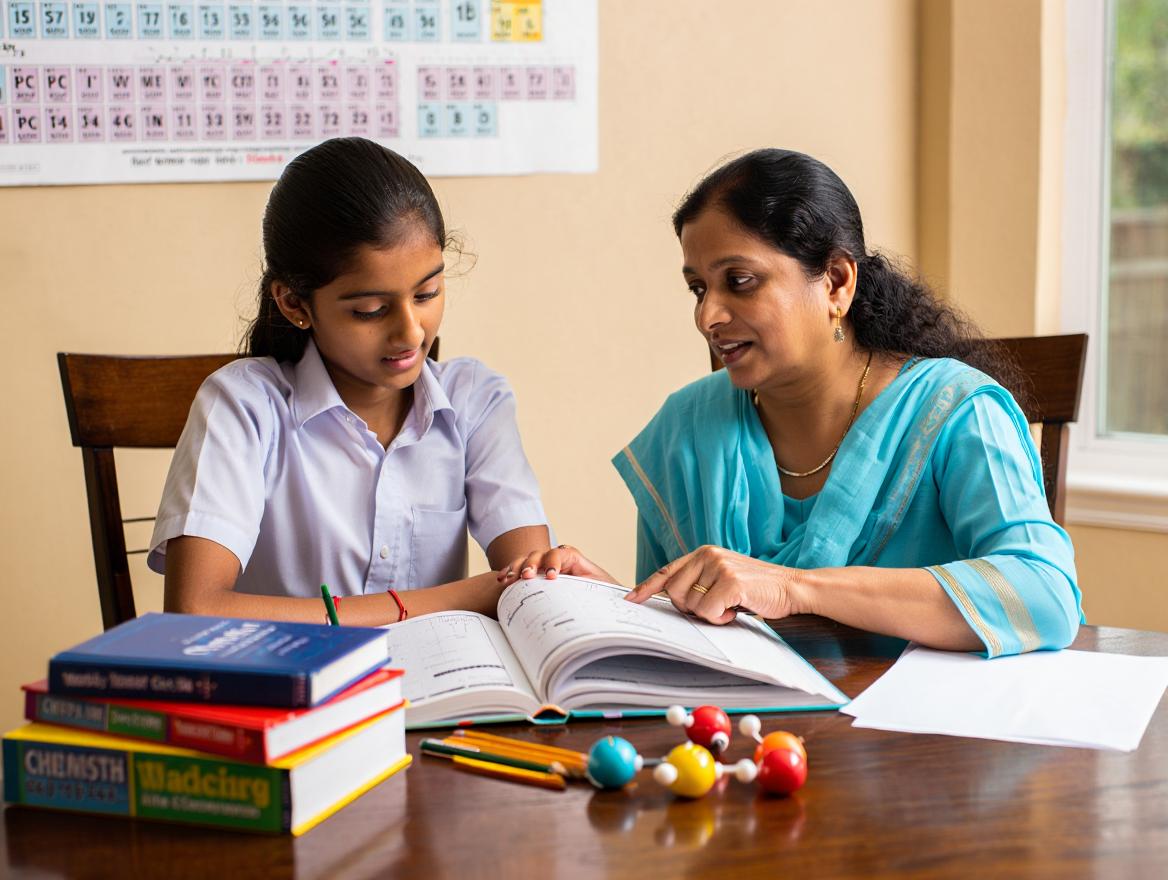
A home tutor works from your child's own notebook and textbooks, which makes it easy to go back to an older idea when a new chapter depends on it. How we teach it one-to-one is set out on our one-to-one JEE maths tuition in Gurgaon page.
Where live online one-to-one fits JEE maths
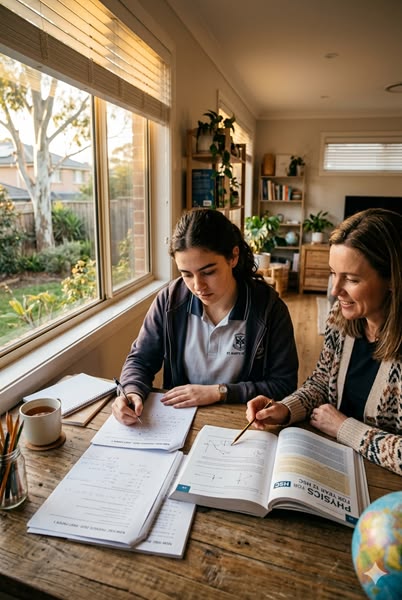
For Class 11 and 12 students juggling school, practicals and three subjects, an online session saves travel and fits later evening slots. It also widens the choice of tutor, which matters for less common needs such as JEE preparation alongside the IB Diploma. For JEE maths it works well when the student solves on paper and shows the working, rather than typing or describing it.
From our tutors: in online JEE maths sessions we ask students to solve on paper, then photograph the page and share it before we discuss the answer. Reading the full working takes a minute and often reveals the real error, such as a dropped negative sign while expanding a determinant, which the final answer alone would hide.
Combining modes
Families often mix. Common patterns are a classroom institute for the main syllabus plus a one-to-one tutor for weak chapters; a tutor at home in term time who switches to video in exam weeks or while the family travels; and short online doubt sessions between home sessions. What matters is that one person keeps track of the student's list of errors across all of it.
From our tutors: when a student comes to us mid-year from classroom coaching, the problem is rarely the whole of maths. It is usually two or three chapters taught on days the student was absent or lost, and everything built on them since. We test those chapters first and reteach only what is missing, so the student can get back to their own schedule quickly.
Five questions to help you decide
- Does your child ask questions freely in a room full of other students?
- Can they keep to a fixed pace without falling behind?
- Is anyone reading their full written working each week?
- How much of the study day does the commute take?
- Do they study steadily alone, or better with an adult present?
If the answers point to independence and confidence, a classroom may be enough. If they point to gaps, silence in class or unread working, one-to-one help, at home or online, is usually the better use of time and money. For how much daily time maths needs in either case, see our guide to daily maths hours for JEE, and for chapter priorities, the JEE Main maths chapter-wise weightage analysis.
What Ajay Vatsyayan Classes offers
We teach JEE maths one-to-one only: tutors visit homes across Gurugram, and students anywhere can take live online classes with the same tutors. Our tutors have 5–15 years of teaching experience, and the team includes IIT and NIT graduates. Over 12+ years we have taught 25,000+ students, and our 500+ verified tutors, men and women, teach children from 50+ Gurgaon schools. For maths, physics and chemistry together, visit our JEE Main and Advanced preparation page. Families near Golf Course Road can read our guide to JEE home tutors on Golf Course Road, and the Ajay Vatsyayan Classes home page shows all the classes, boards and exams we teach.
Frequently asked questions
Are online JEE maths classes as effective as offline ones?
Live one-to-one online classes can match a tutor at home when the student is driven and lets the tutor see each line of working. Large online courses work for independent students but give little personal checking.
Does a student need a coaching institute to prepare for JEE?
No. Nothing in the exam requires it. Students prepare through school, self-study, one-to-one tutoring, institutes or a mix. Choose by how your child learns, not by what classmates are doing.
Which mode suits Class 11, and which suits Class 12?
Class 11 is when foundations are laid, so close checking of working, at home or online one-to-one, pays off. In Class 12, many students add more timed tests and use online sessions to fit around board preparation.
Which mode suits a drop year?
A dropper has no school timetable, so structure matters. Some students need an institute's fixed routine; others do better with a one-to-one tutor who targets the chapters that cost marks last time.
How should my child practise for the computer-based JEE Main paper?
Take NTA's sample mock test on its website, practise entering integer answers on screen, and keep doing rough work on paper, as in the exam hall. Do some full papers on a computer in the final months.
Can we add one-to-one classes to an existing coaching institute?
Yes. Many students keep the institute for the main syllabus and take a one-to-one tutor, at home or online, for weak chapters and for checking written working.
Still weighing classroom, home or online for JEE maths? Use our contact form to share your child's class and board, or phone +91 92204 75088. A free one-to-one JEE maths demo, at home in Gurgaon or online, is the quickest way to see which mode your child responds to.
Ajay Vatsyayan Classes, Saraswati kunj II, Wazirabad, Sector 52, Gurugram, Haryana 122003 · +91 92204 75088.






.png)
.png)
.png)



.png)




.jpg)























.jpg)

.jpg)

.jpg)
.jpg)